
Anticipating the Class Ahead
INTRODUCTORY NOTE: Over the last two years, I have been taking courses through Wesley Seminary in pursuit of a Master of Divinity degree. Though my blogging on this website has been stagnant since the start of the programme, I will be posting a series of reflections over the coming weeks. These posts are part of the coursework for the class Soteriology for Christian Formation, but they will also be a way for you, the reader, to peek into some of my reflections throughout the course.
Beginning my undergraduate journey as a theology major, one question was commonly repeated from those within my church – “Are you sure you are firmly rooted in our Wesleyan theology?” I was entering college at a Calvinist institution, and though I knew that studying theology in a different context would be a challenge, I was up to the task. How little I knew at the time that I would find my greatest struggles in understanding how the Wesleyan soteriology I grew up with contrasted with the lessons being taught in my classes. While I could share the basics of Wesleyan soteriology, I found myself stuck in other areas, particularly on sanctification.
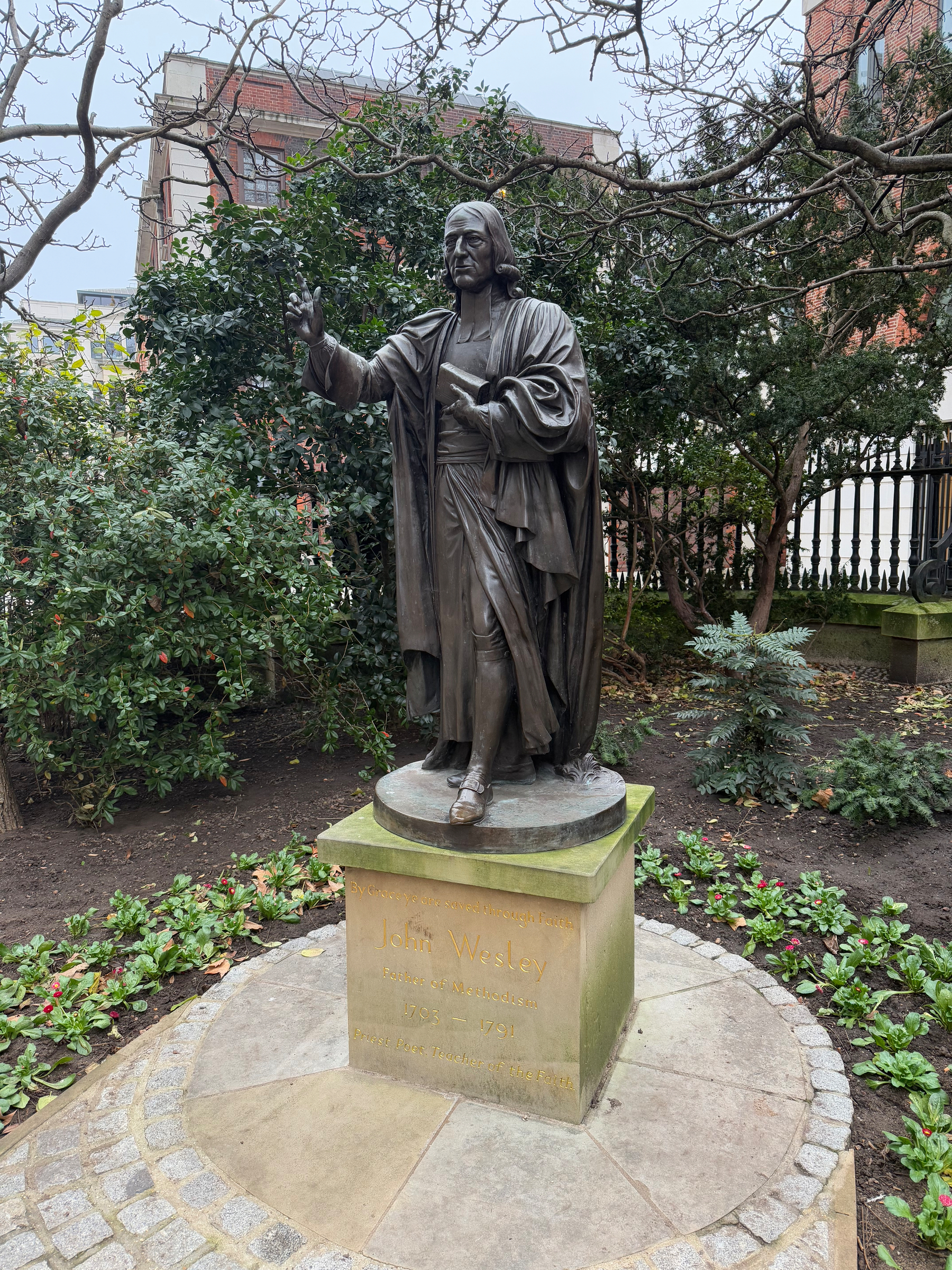
Through the help of other pastors and scholars in The Salvation Army, I was able to begin grasping Wesleyan soteriology in a deeper way. In fact, it enabled me to retain my Wesleyan theology with the bonus of being able to think like and understand a Calvinist’s soteriological perspectives. The most helpful experience was when I was asked to teach the doctrine course sequence at The Salvation Army’s College for Officer Training (seminary), which gave me the excuse and time to dive deeper into resources on Wesleyan soteriology and holiness.
While knowing and understanding soteriology from an academic perspective is important, I want to further explore placing soteriology within the ministry of Christian formation. John Wesley was a practical theologian1 – his primary concern was the spiritual formation of believers as they grew in holiness. Bringing the practical theology of Wesley into the areas of preaching, discipleship, and pastoral care will help others see how salvation is part of our daily lives as we grow to be like Christ.
One of my hopes through this course is to be able to engage in conversations with fellow students in a Wesleyan context. During those early college years, I felt as if I was constantly trying to defend a position, rather than embracing it and growing in it. Now I can engage with fellow Wesleyans as we explore these topics together.
In our primary text for the class, Responsible Grace by Randy L. Maddox, he shares two areas of exploration that particularly intrigue me. First, the very title of the book, Responsible Grace, is his main theme. This is an exploration of both the initiation and direction of God in salvation, coupled with the responsibility and participation of the believer in the journey.2 Second, Maddox has hinted in his introduction about the influence of Eastern Greek Christianity on Wesley’s theology.3 Exploring these influences will give a better understanding into Wesley’s theological development and its practical application in Wesley’s context.
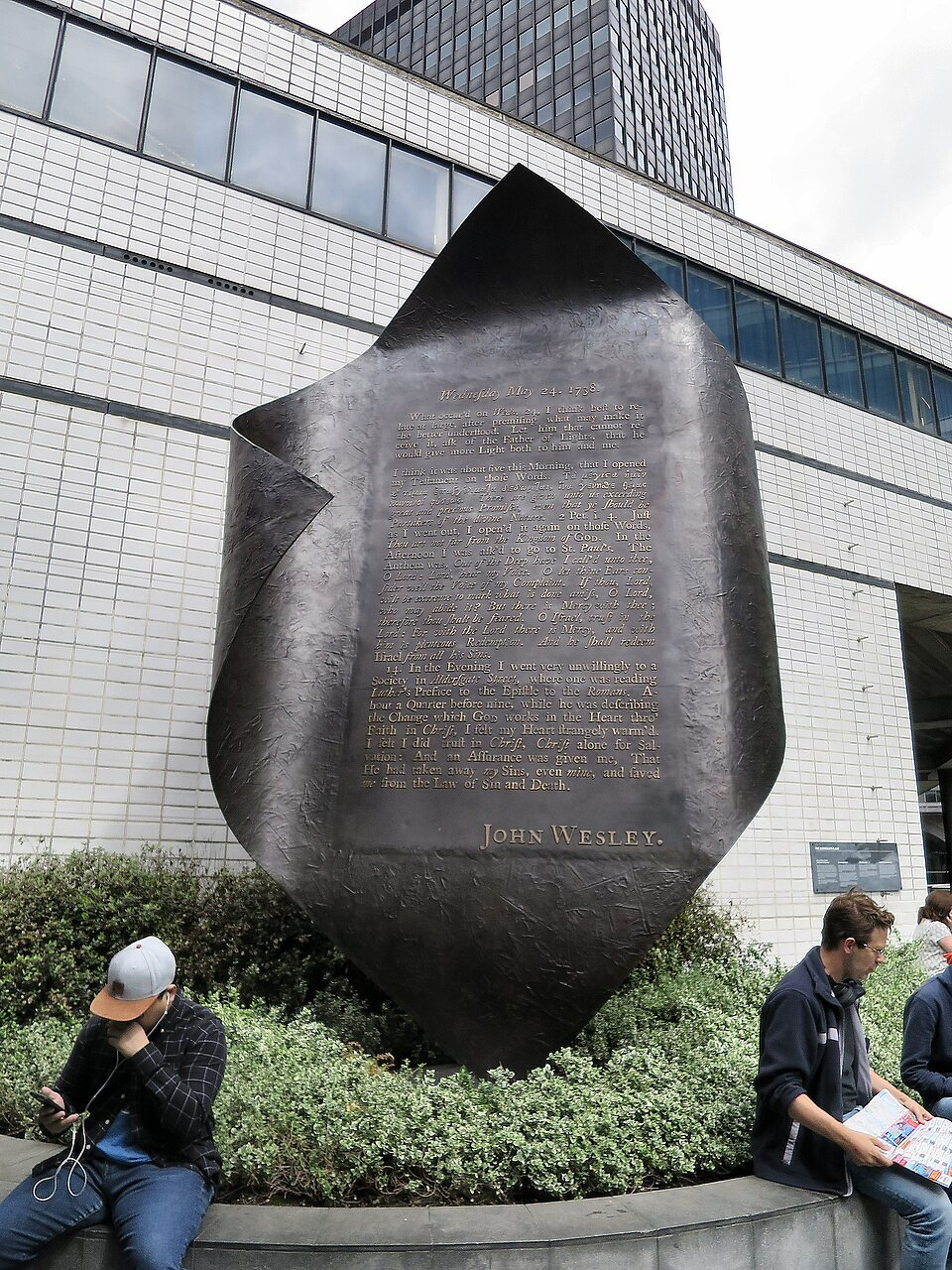
A final point of excitement is the ability to study about John Wesley and his theology in his own homeland. Just a short walk from where I work each day are places where Wesley penned his sermons and journal entries, held spiritual conversations with others, and even had his Aldersgate experience. This is an opportunity to experience John Welsey like no other. Through this, my desire is to take a step into his shoes, learn from his teachings, and bring his practical theology to others.
1 Randy L. Maddox, Responsible Grace: John Wesley’s Practical Theology (Abingdon Press, 1994), 16.
2 Ibid., 19.
3 Ibid., 23.
Photo Credit – Alan Stanton, Aldersgate Flame, 1981, Bronze, London Museum.