
Bring Out the Band

John Wesley was known for his teaching on the means of grace – those practices of the Christian journey in which believers experience God’s grace through a closer relationship with him. Means of grace can include many different practices, such as attitudes of the heart, acts of kindness and mercy, worship and devotion, and much more. Even in John Wesley’s days, means of grace could include contextual practices such as lay preachers and camp meetings.1
One of those unique practices that arose in Wesley’s day was the band meeting. Today, we might compare this to a small group or an accountability group, but Wesley’s band meetings were far more intensive than many would practice today. According to Wesley, the band meetings came about because believers “…wanted some means of closer union; they wanted to pour out their hearts without reserve, particularly with regard to the sin which did still easily beset them, and the temptations which were most apt to prevail over them.”2 Wesley’s Methodists sought a means to experience the forgiving and freeing grace of God through communal accountability and confession. So, Wesley formed what he called “bands.”
The bands were formed of four to seven people of the same gender who would meet weekly for an intimate time of confession, prayer, forgiveness, and support.3 This practice was seen as another way for believers to experience God’s grace and continue growing in holiness. It was also a central part of Wesley’s view of social holiness, as it brought believers together in community to pursue holiness together.4
If the band meeting was such an important part of Wesley’s practices with his Methodists, then why do we rarely see such meetings today? The likely answer is that the practice of communal confession is challenged by today’s individualistic view of faith. Wesley’s band meeting questions were not for the faint of heart:
1. What known sins have you committed since our last meeting?
2. What temptations have you met with?
3. How were you delivered?
4. What have you thought, said, or done, of which you doubt whether it be sin or not?
5. Have you nothing you desire to keep secret?5
These questions may be seen today as intrusive, but Wesley saw them as guides towards Christian accountability and the pursuit of holiness. The band meeting was not to be a place of shame or humiliation; rather, it was to be a place of forgiveness, grace, and love for one another.
Reflecting on the usefulness of the band meetings, Wesley wrote, “They prayed for one another, that they might be healed of the faults they had confessed; and it was so. The chains were broken, the bands were burst in sunder, and sin had no more dominion over them. Many were delivered from the temptations out of which, till then, they found no way of escape.”6 Rather than seeking the same freedom, deliverance, and healing, many believers today hold tightly to their sins and mistakes, hoping no one will ever know. They may see their sin and their forgiveness as purely private matters between them and God. Yet believers continue in private struggle without means of accountability and communal affirmation of God’s grace.
Perhaps it is time for churches and believers to reconsider the practice of band meetings. Imagine the freedom and relief of hearing fellow believers' prayers as they assure you of your forgiveness and of God's healing grace after communal confession. Imagine knowing that what you share with your band stays between you and that each of you desires the same thing: holiness. Imagine journeying for years on end with the same close-knit group as you grow in Christlikeness and experience God’s grace together.
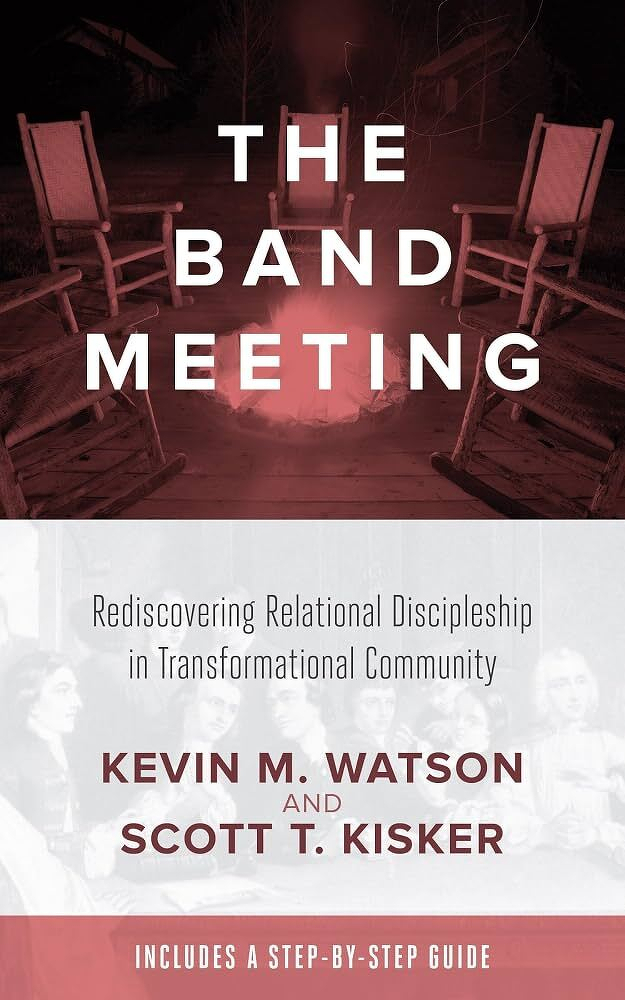
If you are interested in learning more about band meetings and how to start one of your own, I recommend a small book titled The Band Meeting: Rediscovering Relational Discipleship in Transformational Community by Kevin M. Watson and Scott T. Kisker.7 In this book, Watson and Kisker explain the principles of the band meeting, how to form one, and how to ensure you have a band that thrives. Perhaps the band meeting can once again become one of the means of grace which help believers in their journey towards holiness.
1 Wesley Seminary, Table Talk: The Means of Grace, with Tammie Grimm et al., Table Talk, 2022, at 7:36, 18:57, https://www.youtube.com/watch?v=XzMPwZ0D23A.
2 John Wesley, “A Plain Account of the People Called Methodists,” in The Works of John Wesley, Third Edition, vol. 8, by John Wesley (Wesleyan Methodist Book Room, 1872), 258.
3 Paul Wesley Chilcote, Recapturing the Wesleys’ Vision: An Introduction to the Faith of John and Charles Wesley (IVP Books: An Imprint of InterVarsity Press, 2004), 50.
4 Kevin M. Watson, Doctrine, Spirit, and Discipline: A History of the Wesleyan Tradition in the United States (Zondervan Academic, 2025), 50.
5 Ibid.
6 Wesley, “A Plain Account of the People Called Methodists,” 259.
7 Kevin M. Watson and Scott T. Kisker, The Band Meeting: Rediscovering Relational Discipleship in Transformational Community (Seedbed Publishing, 2017).
Photo by Meilisa Dwi Nurdiyanti on Unsplash