
Responsible Grace Reflections
Over the last eight weeks, I have had the privilege to explore John Wesley’s soteriology in a Wesleyan context through a course for my master’s degree. I posted earlier about my expectations for the course, but in this post, I look at how those expectations were met over the last several weeks. Throughout this course, it has been a pleasure to engage in theological conversations with other Wesleyans, explore the idea of “responsible grace” as presented in our textbook, and examine some of the unique influences on John Wesley as he developed.
First, it was wonderful to connect with fellow Wesleyans and discuss theology throughout the course. As I shared in my first post, I did not have many other Wesleyan-Arminian students around me during my undergraduate theology degree. The opportunity to have conversations and, at times, wrestle with Wesley’s soteriology is one that I will deeply cherish. An important lesson from this is to find those with whom you can have deep, honest conversations about theological and spiritual matters. Being in community is one of the ways we see God’s grace at work in our salvation journey.
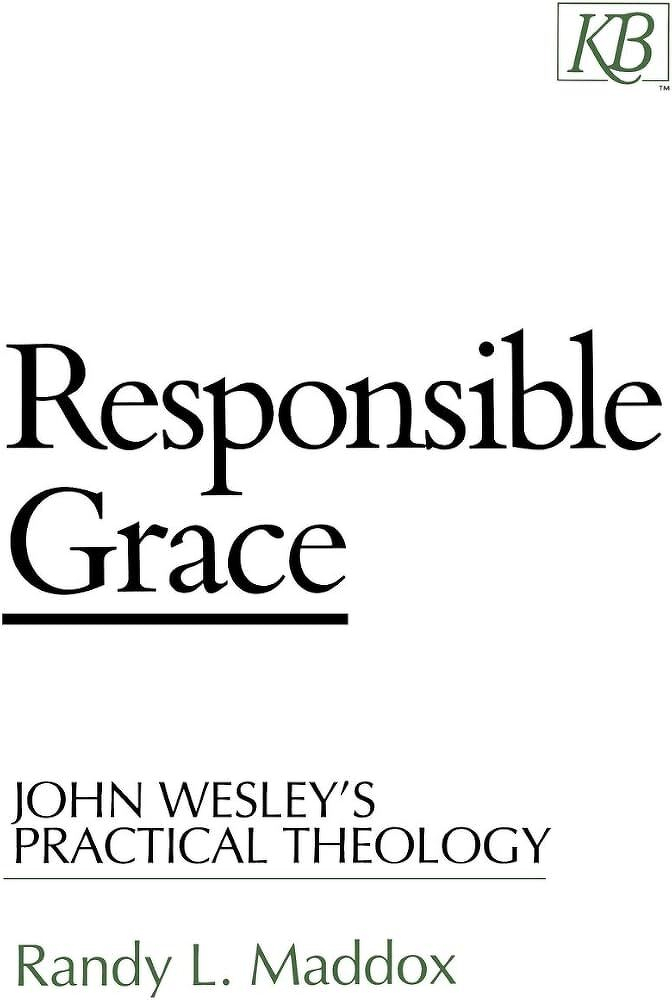
Second, the concepts presented in Randy L. Maddox’s book, Responsible Grace,1 helped me see Wesley’s theology in a new light. Maddox brilliantly blends the boundless grace of God with humanity's responsibility to accept and receive God’s grace through the means of grace. Throughout the text, Maddox balances the works of God and the responsibilities of believers to show how the entirety of salvation is a relational and cooperative journey. This concept of responsible grace is most evident in the sections on the means of grace. We engage in spiritual practices not just because it is something we are “supposed to do.” Instead, spiritual practices are the way in which we experience God’s grace throughout our salvation journey and as we grow in holiness. While reading Responsible Grace has been eye-opening, there is a need for a new generation of Wesleyan theologians to carry on this theological tradition through new publishing. As of today, Maddox’s work is now 32 years old (nearly as old as me). It is time for the new voices of Wesleyan theology to rise.
Third, Maddox’s book explored the influence of Eastern Greek Christianity on John Wesley’s theology. This was a helpful exploration of how different theological traditions can view salvation in different ways. For example, Western Christianity views salvation in a much more juridical manner (think of crime, punishment, and judgment), while Eastern Christianity views salvation in a therapeutic manner (think of healing, care, and restoration). While Wesley retained many aspects of Western Christianity, Eastern Christian influences are evident in his challenge to some Reformed perspectives of his day and in his embrace of holiness in his teaching.
The explorations within this course have been immensely helpful and have deepened my understanding of Wesley’s soteriology. Even though the course may be ending, there are still some goals I bring with me. First, I want to incorporate much more of Wesley’s teachings into my preaching. Wesley’s sermons have so much to offer to the church today, as long as we put them into today’s language. Second, I want to continue writing more on this blog about Wesley’s theology. As I shared earlier, we need the next generation of Wesleyan theologians to carry the flag through research and writing. Finally, I want to explore more of John Wesley's history while I am living in London. There are many other places where Wesley ministered that I have not yet visited. Exploring these is a unique experience that can continue bringing Wesley’s teachings to life.
1 Randy L. Maddox, Responsible Grace: John Wesley’s Practical Theology (Abingdon Press, 1994).